CardProtect and RFID blocking: what it really protects
CardProtect is sold as a sleeve or wallet insert that blocks radio signals from your contactless cards. The blocking itself works. A thin metal layer stops a reader from talking to the chip. The harder question is how often anyone actually tries to read your card this way, and the honest answer is rarely. Here is what RFID blocking covers, what it ignores, and whether it deserves a place in your pocket in 2026.
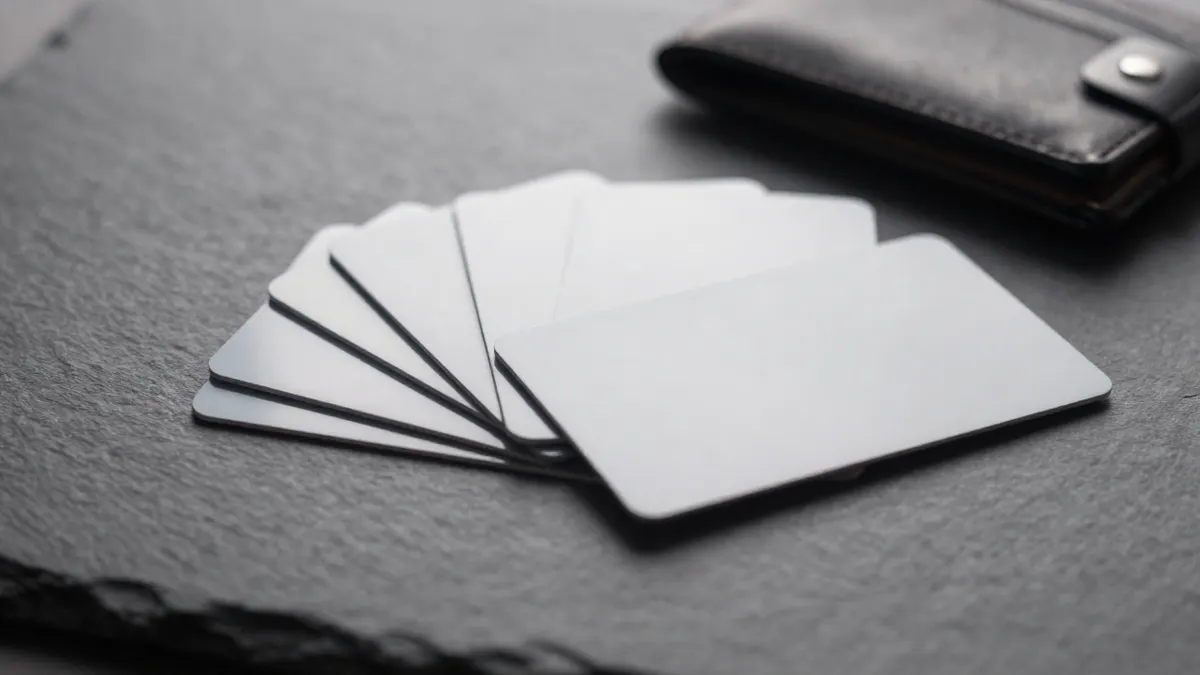
How RFID blocking works
Contactless bank cards, some passports and many office badges carry a small antenna. When a reader sends out a radio field, the antenna powers the chip and the chip answers. A blocking layer, usually aluminum or a nickel-copper weave, forms a shield around the card and absorbs or reflects that field. No power, no answer.
Most sleeves are about 0.1 to 0.3 mm thick. Prices run from roughly $5 for a pack of sleeves to $30 or more for a blocking wallet. The shield only works when the card sits fully inside it, so a card left half out is still exposed.
Which cards are actually at risk
Standard payment cards use near-field communication at 13.56 MHz. Their working range is about 4 cm, and a purpose-built reader might stretch that to 10 cm in a lab. That is a short reach. Someone would have to hold a device almost against your pocket.
Even if a reader succeeds, the data is limited. It usually returns the card number and expiry date, but not the security code, and each payment uses a one-time cryptogram. Cloned contactless data is hard to turn into a purchase.
- Payment cards: low risk, short range, limited data
- Passports with chips: moderate interest, but the data is protected by a key printed inside the document
- Hotel keys and office badges: the most clonable, because many older ones use weak protocols
- Transit cards: depends on the system, and older ones can be copied
What CardProtect does not stop
This is where the marketing gets thin. A blocking sleeve does nothing against stolen card numbers from a data breach, phishing emails, fake checkout pages or a skimmer fitted to a gas pump. Those cause most card fraud, and none of them involve reading your pocket.
It also does not cover your phone. Mobile wallets are already harder to skim than plastic cards, and they need your face or fingerprint to approve a payment.
Chip-and-PIN cloning and magstripe copying are separate problems too. If a card still has a magnetic stripe, a sleeve does not touch that data.
Is CardProtect worth it
For most people, it is a small comfort rather than a real safeguard. If you carry an old office badge or hotel key you cannot replace, a sleeve costs little and does help. If you only carry bank cards, your money is better spent on alerts from your bank and a card with a low liability limit.
One practical point: cheap sleeves vary a lot. Some claim protection but only shield one side. A simple test is to place the sleeved card on a contactless terminal or hold your phone's NFC reader app near it. If it still reads, the shield is not doing its job.
Be careful with the wording on the packaging. Claims such as "100% protection from identity theft" are marketing, not a tested result. The same caution applies to other viral gadgets, and our look at AirClean air purifier claims shows how bold promises often shrink once you read the fine print. A Cellulife product review and a Nanocool product review follow the same approach: check what the product does against what the box says.
Better habits than relying on a sleeve
Turn on instant transaction alerts. Check statements weekly for the first month after any breach notice. Use a virtual card number for online shopping when your bank offers one. Keep contactless limits low, since many banks let you cap tap payments at around $50 to $100.
Those steps cover the threats that actually cost people money.
Frequently Asked Questions
Can someone really steal my card details by walking past me?
It is very unlikely. Contactless cards work from about 4 cm, and the data you get is limited and not enough for most purchases. Documented cases of pocket skimming causing real losses are rare.
Does aluminum foil work as well as CardProtect?
Often yes, if the card is fully wrapped with no gaps. Foil is fragile and tears, so a sleeve lasts longer. The shielding principle is the same.
Do I need RFID blocking for my passport?
Not much. Chip passports need a key printed on the data page before they release information, so a remote read gets very little. A sleeve is optional.
Will a blocking sleeve damage my cards?
No. The sleeve is passive and does not alter the chip or the magnetic stripe. Very tight sleeves can scratch a card surface over time, so pick one with a smooth lining.